Introduction: The Islamic Republic of Iran and the Age of Global Resistance
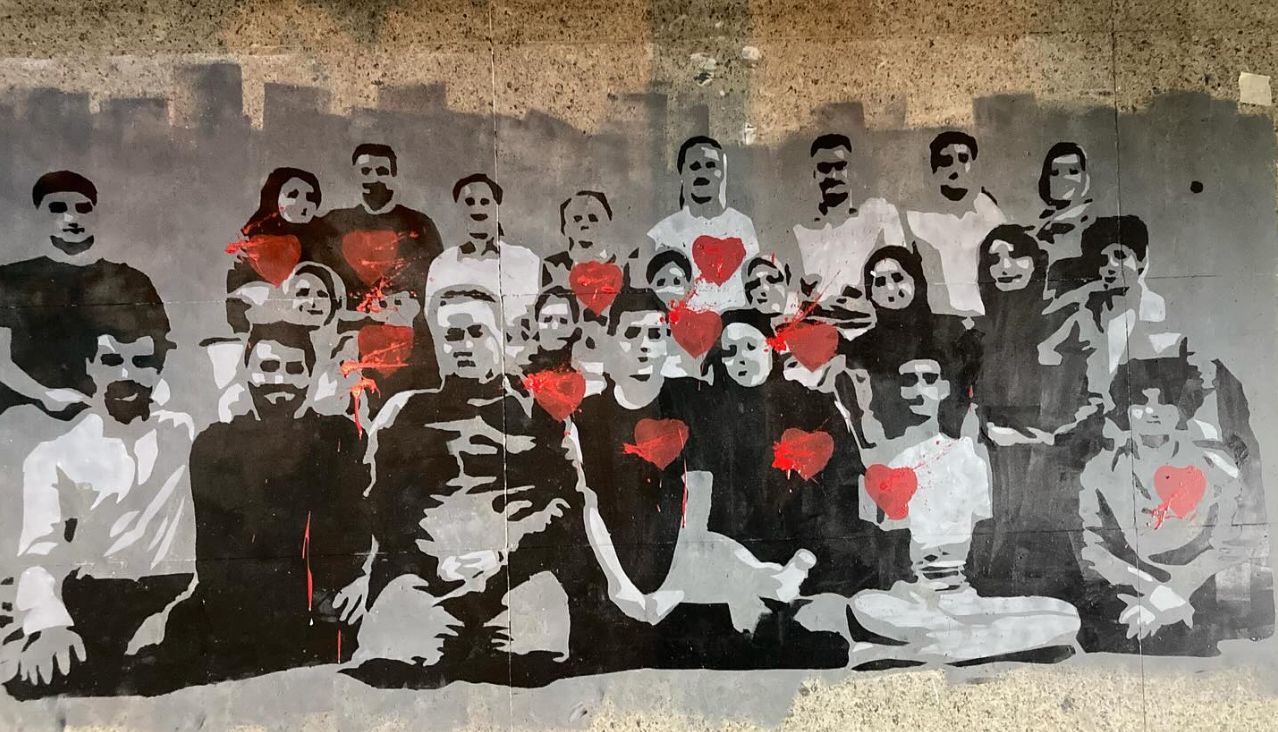
The Anti-Imperialist Scholars Collective conceived of this special issue entitled The Islamic Republic of Iran and the Age of Global Resistance in January 2026, following the U.S.-zionist urban warfare campaign and coup plot against the Islamic Republic of Iran. We were struck by the disinformation that our friends, colleagues, and comrades were consuming and sharing about Iran, disinformation used to justify war and murder. From claims of women’s subjugation to mischaracterizations of the Iranian economy and society, including claims of “theocratic authoritarianism,” political confusion created the terrain for ideological warfare against the nation and State of Iran.
In this Special Issue, we offer a broad corrective to the dominant analysis on the Ramadan war. We defend the Islamic Republic of Iran in its herculean effort to bring about a new West Asian region—and globe—liberated from the clutches of the most violent and powerful empire in world history. AISC Red Paper #2 explains “The Multiple Fronts of Iranian Anti-Imperialism,” from its nationalist-developmentalist resistance economy to the anti-imperialist People’s War waged daily in the streets of Iran, to the battlefield victories brought on by the Axis of Resistance and its Unity of Fields.
In another collectively written contribution, “A Primer on the Axis of Resistance: A World Historical Force for Liberation,” we honor the Axis of Resistance. Since the launch of Operation Al Aqsa Flood on October 7, 2023 and the ensuing and accelerating genocide in Palestine, the Axis of Resistance has taken its rightful place in history alongside the world’s greatest revolutionary movements. This short primer is a political education tool and a call for revolutionary steadfastness and discipline as the war of liberation continues.
“Zionism, U.S. Imperialism, and the Capitalist Ruling Elite,” also authored collectively by AISC, exposes the integrated nature of zionism and the U.S. imperialist ruling class. The synthesis of U.S. and zionist capital and technology do not reflect a bilateral partnership, but rather, a dense articulation of capital that undergirds U.S. imperialism—operating through a shared techno-economic and military architecture. This synthesis has one purpose: to advance U.S. imperialism.
In “What Cannot Be Bombed: Iran’s Logic of Self-Reliant Development,” Professor Zeinab Ghasemi Tari describes how Iran’s logic of sovereign development undergirds its systems of education, medicine, agriculture, and military defense. “Knowledge,” as Dr. Ghasemi Tari says, “cannot be bombed into oblivion. And what is grown at home can never be uprooted.” No amount of war or destruction can alter this path.
This issue also includes essays discussing linkages between imperialist assaults in other parts of the world and the zionist-imperialist war against Iran, Iraq, Lebanon, and Palestine. In “Run of the Mill Burgers and Genocides,” Sarmad Tokatlian discusses the systematic lines that link the empire’s assault on Iraq, Iran, Venezuela and China. Nicholas Greven's "A Terrorist Double Standard" exposes how imperialism weaponizes the law against Cuba, from the indictment of Raúl Castro on Wednesday, May 20, as this special issue went to publication, to the pardoning of the convicted terrorist Orlando Bosch. These cases show how legal persecution and mercenary patronage are two sides of the same imperialist coin.
But the empire's arsenal extends beyond bombs, sanctions, and legal manipulation. It also operates through collaboration and cooptation. The imperialist-Zionist war-machine secures hegemony by recruiting and coopting allies in order to deepen collusion across the globe. Tomomi Bae Kinukawa's contribution exposes the "Israelization of Japan," revealing how zionists, white supremacists, and the Japanese far right collude to accelerate Japan's militarization as an integral part of this war-machine while cementing impunity for past and ongoing genocides through shared "denialism" and colonial frameworks. Mehiyar Kathem Al Sa'edi's commentary, "Threatening Collapse in Iraq," details how the 2003 U.S. invasion systematically dismantled the Iraqi state and rewired its political economy. In doing so, the U.S. occupation aimed to achieve permanent subordination through external financial gatekeeping (a Federal Reserve account that forces Iraq to beg for its own oil revenues) and internal political fragmentation ("muhasasa," an ethno-sectarian quota system that makes unified resistance to imperialism difficult).
Yet imperial violence is not only inflicted on subjugated populations; it also consumes its own. Peoples of the empire cannot escape the effects and wounds of imperialist wars, as Eli Matthew expresses in "A Collection of Writings and Drawings." Matthew was a friend of Aaron Bushnell, the U.S. soldier who committed self-immolation in protest against the genocide of Palestinians.
For this issue, AISC also interviewed Professor Setareh Sadeqi, seeking to better understand the role of women in Iran’s long history of anti-imperialist struggle. According to Professor Sadeqi, women in Iran are “not peripheral actors; they participate in mass mobilizations, political organizing, and revolutionary activism, framing their struggle as one for national sovereignty as well as social transformation.” Put simply, Iranian women don’t need saving. In fact, Professor Sadeqi shows that the women of Iran have a lot to teach the world about the relationship between women’s liberation and national liberation.
Together, these essays reflect the breadth and depth of the Iranian Revolution, in global context but also in the context of Iranian history and society. They reveal how an anti-imperialist struggle is waged across society, reflecting the complexity of human life and the yearning for liberation. We note that this struggle, nearly a century long, is not without its costs. Two of our members lost a dear and beloved family member in the aftermath of the Ramadan War. She was a retired elementary school math teacher who helped raise her younger siblings and their children. She was a supporter of the Iranian Revolution, and a lover of Iran and its people. During the height of the Ramadan War, she refused to leave her home in Tehran. This special issue is dedicated to her, and to all the people of the region who have sacrificed in service of liberation. May our sacrifices not be in vain.
Nina Farnia and Corinna Mullin are members of AISC.